
Table of contents
Introduction
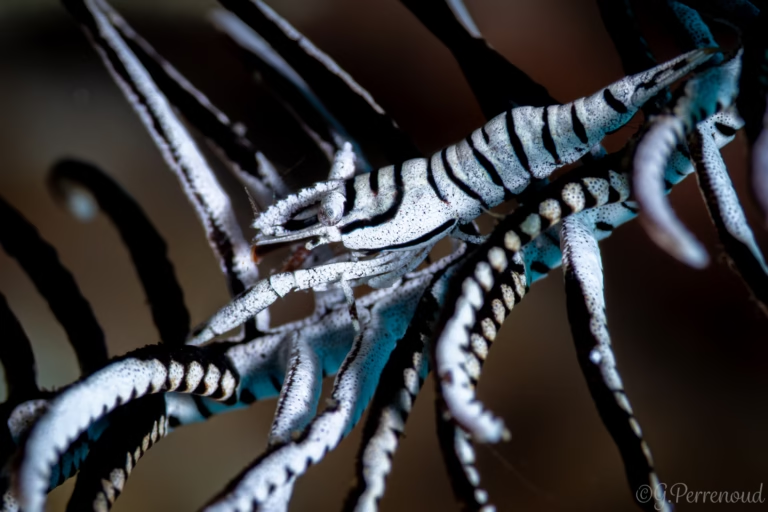
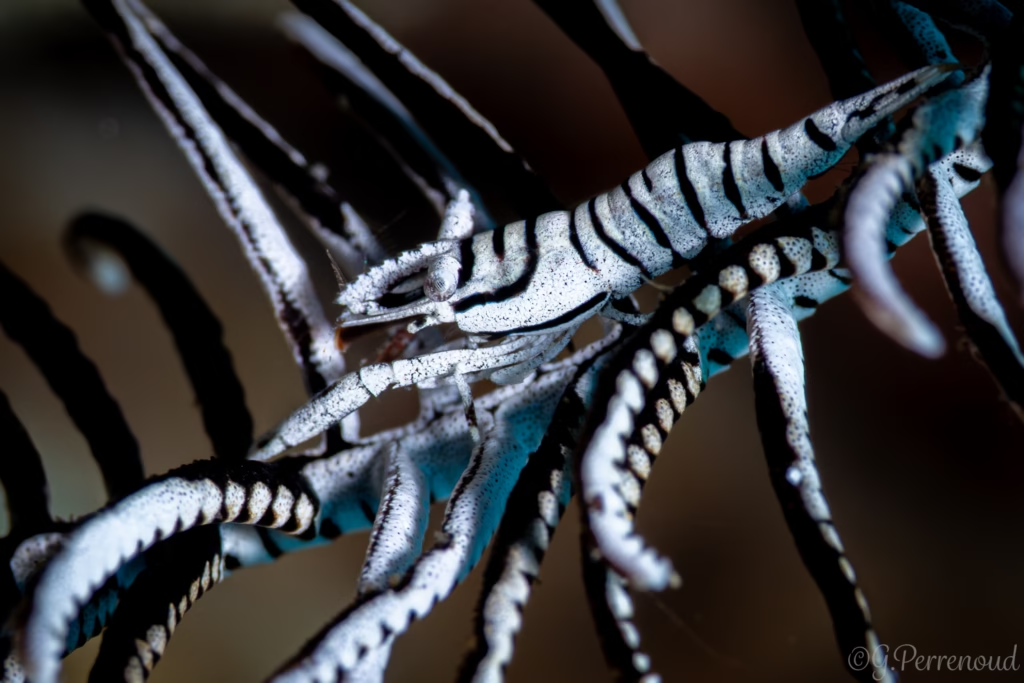
Crinoid shrimp excel at the art of camouflage. These tiny creatures find shelter among their hosts’ feathery arms, creating one of nature’s most remarkable partnerships. These small crustaceans reach only 3 cm in length and thrive in the waters off South Africa’s False Bay, at depths between 10 and 30 meters.
Most people might mistake crinoids for plants, but these “sea lilies” are actually marine animals. The world’s oceans host roughly 700 living crinoid species. These remarkable creatures make their homes in a variety of marine environments. They adapt to life from shallow waters down to staggering depths of over 9,000 meters (30,000 ft). The bond between crinoids and their shrimp companions showcases nature’s intricate connections. Both species thrive through their close association, with crinoids offering vital protection to the shrimp from predators.
In this piece, we’ll uncover the secrets of these perfect partners and explore their fascinating relationship.
What are crinoids and why do they matter?
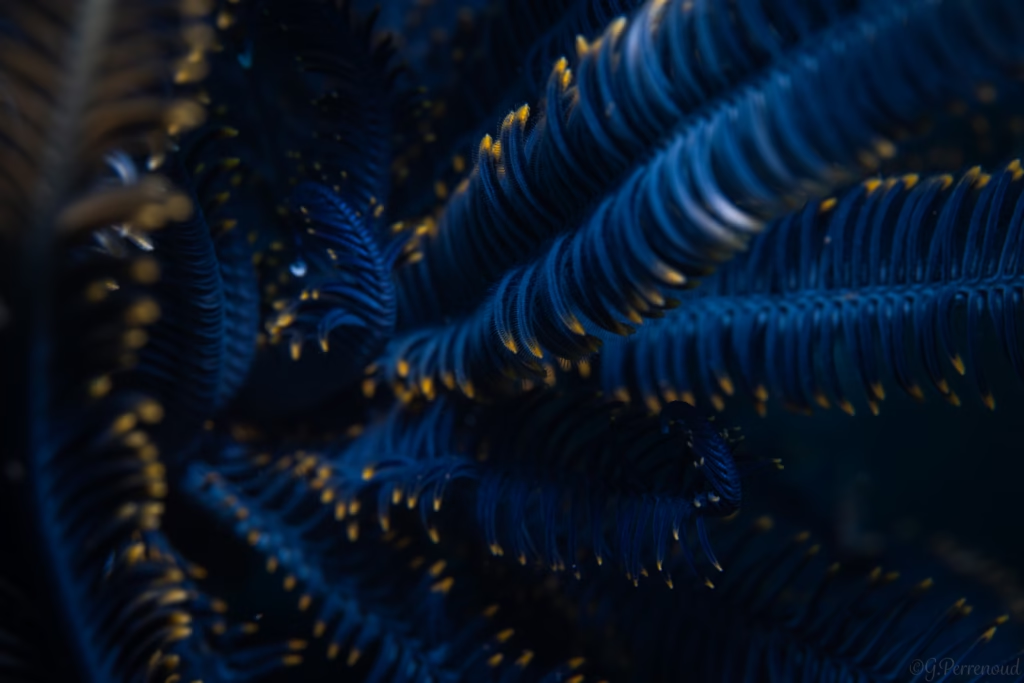
Ancient creatures have survived for over 500 million years. Crinoids are often called “living fossils” because they appeared long before dinosaurs and have changed little since. These captivating marine animals might look like underwater plants, but they’re actually members of the phylum Echinodermata. This makes them close relatives to more familiar ocean dwellers.
Crinoid classification and relatives
The class Crinoidea currently has around 600-700 living species. As echinoderms, they share key characteristics with four other major groups:
- Sea stars (starfish)
- Sea urchins
- Brittle stars
- Sea cucumbers
All echinoderms have a simple five-sided symmetry and a calcareous skeleton covered by a thin skin layer. Unlike their relatives who typically have their mouths on the underside, crinoids’ mouth and anus are located on their upper surface.
Sea lilies vs feather stars
Two distinct forms of crinoids exist, each with unique lifestyle and appearance:
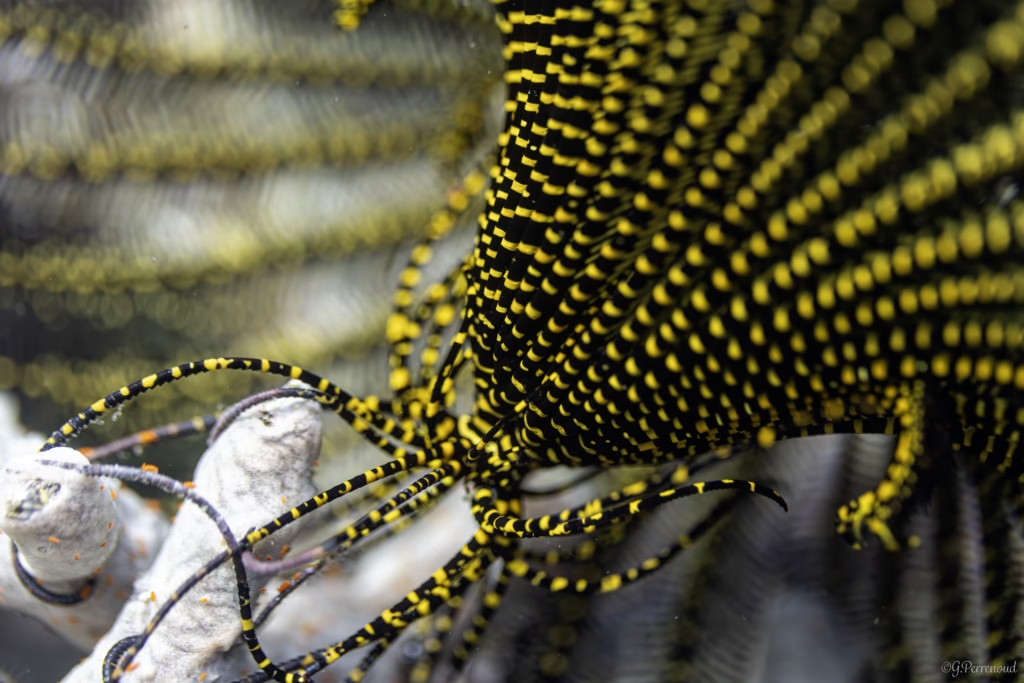
Sea lilies stay attached to the seafloor by a long stalk throughout their lives. These stalked crinoids raise themselves above the ocean bottom to feed better and live in deeper waters.
Feather stars lose their juvenile stalk as they become adults. They use tiny claw-like structures called cirri to grip onto rocks, corals, or other surfaces instead of a stalk. This makes them more mobile than their stalked cousins. They can even swim slowly by flapping their feathery arms.
Meet the crinoid shrimp: a hidden partner
A remarkable creature lives hidden in the feathery arms of crinoids, yet most divers miss it completely. The crinoid shrimp has created one of the ocean’s most fascinating partnerships by making its home within these graceful hosts.
What is a crinoid shrimp?
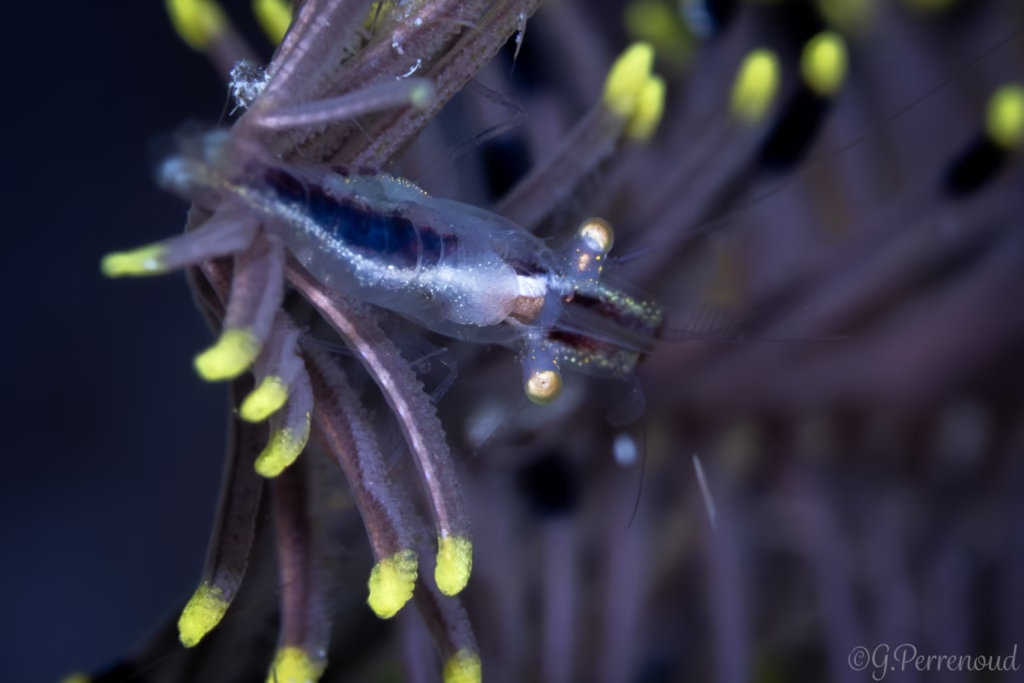
These tiny creatures, known as crinoid or feather star shrimp, come from several genera including Hippolyte and Periclimenes. They are specialized crustaceans that grow no longer than 25 to 30 millimeters and live only on feather stars. Hippolyte catagrapha stands out as a prominent species that makes its home on the elegant feather star, Tropiometra carinata.
These shrimp show complete dedication to their crinoid hosts. They spend their lives within a single feather star’s protective arms and rarely venture away. Research shows that each crinoid usually houses just one shrimp, which makes scientists wonder about their mating habits.
How shrimp live on crinoids
The sort of thing I love about crinoid shrimp is their relationship with their hosts. Scientists often call it commensal (helping one party without affecting the other), but “associates” might be more accurate since we still have much to learn.
These smart little crustaceans get several benefits:
- Protection from predators, since most marine hunters avoid bad-tasting crinoids
- Some grab food particles heading toward the crinoid’s mouth
- Others might feed on their host’s waste material
The crinoid seems unbothered by its tiny guests. The shrimp’s habit of intercepting small food particles doesn’t affect the crinoid’s feeding much.
Why they are hard to spot
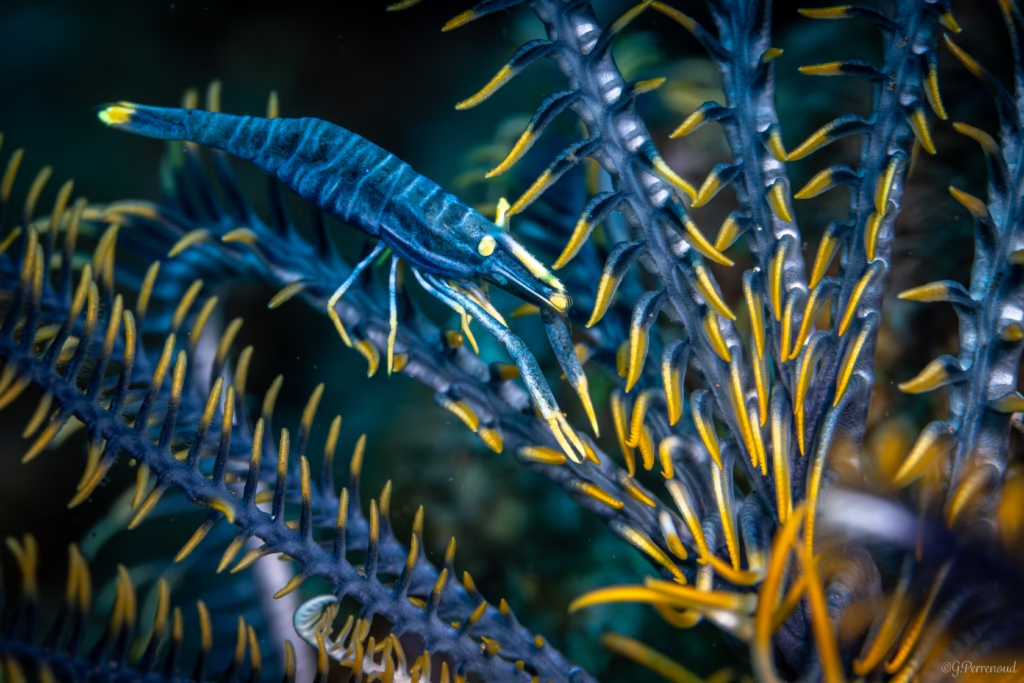
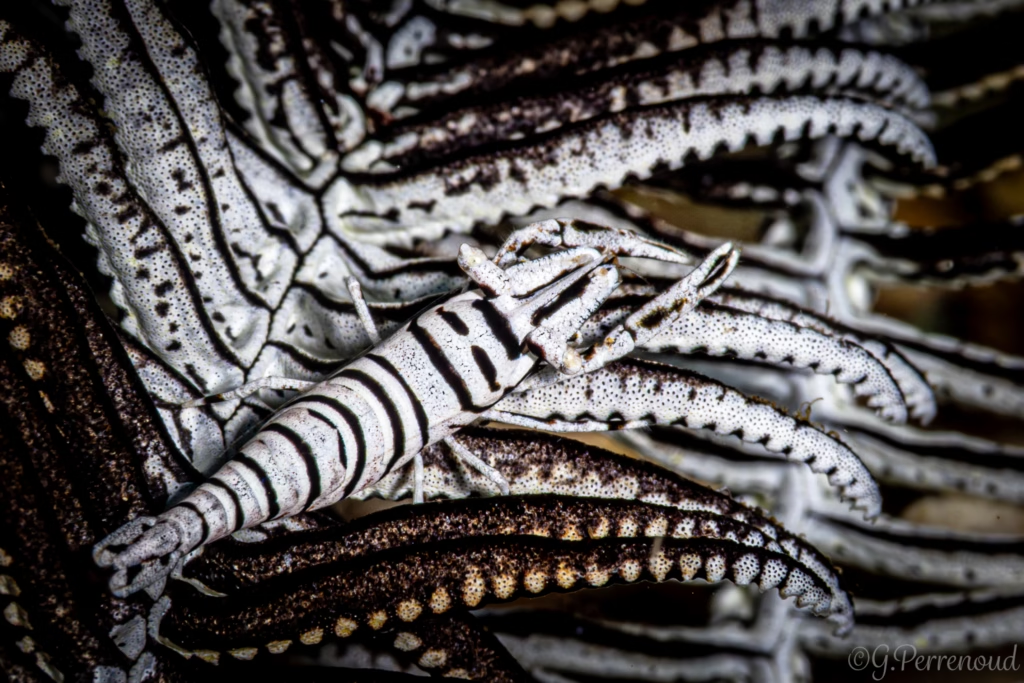
Finding these shrimp takes incredible patience and sharp eyes. Their main defense – perfect camouflage – makes them almost impossible to see for predators and underwater photographers alike. Each shrimp matches its host crinoid’s exact color, whether yellow, white, black, blue, orange, green, brown, or mixed shades.
These tiny creatures usually hide deep inside their host’s arms. Photographers face extra challenges because the crinoid’s arms move constantly, hiding the shrimp from view. Their tiny size – usually smaller than 1cm – makes spotting them even harder.
Scientists still puzzle over how these shrimps achieve their perfect color match. Nobody knows if they pick hosts matching their color, develop matching colors early in life, or use some other clever adaptation.
Conclusion
Nature has created perfect partnerships, exemplified by crinoid shrimp and their crinoid hosts. These tiny crustaceans excel at camouflage, adapting their colors to match their hosts and finding safety within the crinoids’ feathery arms. In return, crinoids receive cleaning services from these residents. This relationship is one of the ocean’s most specialized symbiotic arrangements, showcasing evolutionary precision, whether through selection or early development.
Scientists study these partnerships, yet mysteries remain, such as how young shrimp locate their hosts and if adults switch hosts. You might spot a camouflaged shrimp next time you visit a coral reef or view underwater photos. Look closely at crinoids—their waving arms may conceal a shrimp nearly invisible to most.
This hidden world of tiny creatures living in harmony illustrates the intricate relationships that support biodiversity in our oceans, which we are just beginning to understand.
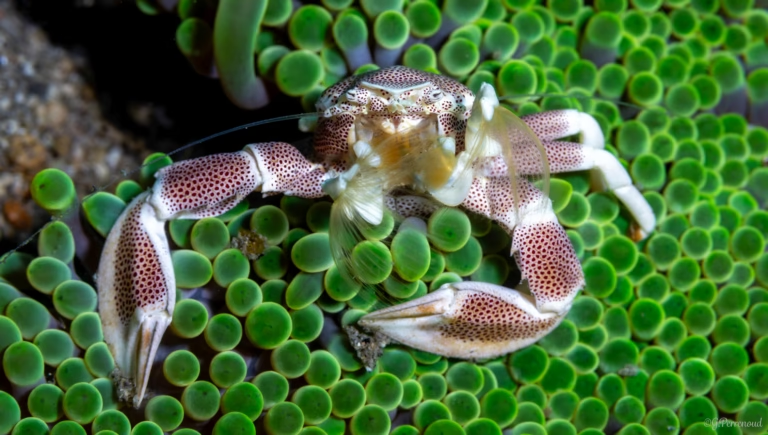
Scientists have discovered that coral guard crabs actively seek young crown-of-thorns starfish, changing our view of reef ecosystems. These crustaceans are vital biological control agents against significant threats to coral reefs, consuming several starfish daily. Their relationship with coral hosts exemplifies nature’s brilliance, as both species support each other’s survival—corals gain protection while crabs receive nourishment and shelter. This collaboration shows co-evolution’s role in resilient ecosystems.
Biodiversity is crucial for reef systems, with various crab species providing multiple layers of protection. Maintaining healthy crab populations is essential for safeguarding coral reefs globally. Conservation efforts should encompass not just corals but also the fragile partnerships that exist. Research shows reefs with strong crab populations suffer less damage from crown-of-thorns outbreaks.
However, these protective systems have limits against large-scale predator attacks. While guard crabs are strong defenders, they cannot protect corals indefinitely from overwhelming threats, emphasizing the need for a comprehensive ecosystem protection approach. Coral guard crabs remind us that effective conservation requires understanding the interactions among all elements, illustrating how nature’s collaborations can help preserve coral reefs for future generations.
FAQ
Q1. What are crinoid shrimp and where can they be found? Crinoid shrimp are tiny crustaceans that live exclusively on feather stars, a type of marine animal. They can be found in tropical waters, often in coral reef environments, at depths ranging from 10 to 30 meters or more.
Q2. How do crinoid shrimp camouflage themselves? Crinoid shrimp have an remarkable ability to perfectly match the color of their host crinoid. They can appear in various colors including yellow, white, black, blue, orange, green, brown, or combinations of these, making them nearly invisible to predators and observers.
Q3. What is the relationship between crinoid shrimp and crinoids? The relationship is largely beneficial for both parties. Crinoid shrimp receive protection from predators and access to food particles, while crinoids benefit from a “cleaning service” as the shrimp remove detritus and excess plankton from their arms.
Q4. How do crinoid shrimp locate their hosts? Crinoid shrimp primarily use chemical detection to find their hosts. They can differentiate their natural host’s odor from other water flows. Visual cues also play a role, with shrimp orienting towards large silhouettes resembling crinoids. Final confirmation is made through physical contact.
Q5. What aspects of the crinoid shrimp-crinoid relationship are still unknown to scientists? Scientists are still unsure about how juvenile shrimp recruit to hosts, whether adult shrimp ever change hosts, and the exact chemical compounds involved in host recognition. The mechanism behind the perfect color matching between shrimp and crinoids also remains a mystery.
References
[1] – https://www.lembehresort.com/blogs/crinoids-the-living-fossils
[2] – https://seaunseen.com/crinoid-shrimp/
[3] – https://www.frontiersin.org/journals/marine-science/articles/10.3389/fmars.2025.1614247/full
[4] – https://www.coralmagazine.com/2019/06/26/new-species-of-crinoid-commensal-shrimp/
[5] – https://spiritliveaboards.com/blog/what-is-a-crinoid-discovering-the-beauty-of-ancient-sea-creatures/
[6] – https://en.wikipedia.org/wiki/Crinoid_shrimp
[7] – https://projectnoah.org/spottings/crinoid-shrimpfeather-star-shrimp
[8] – https://blog.mares.com/crinoids-flowers-reef-11061.html
[9] – http://marinebiology.org/2019/01/09/ambon-crinoid-shrimp-a-master-class-in-camouflage/
[10] – https://www.threads.com/@jhoon_aun/post/DRcdhOmDyXI/a-difficult-critter-to-photographnormally-a-lot-of-these-shrimps-are-hidden-deep
[11] – https://xray-mag.com/content/fantastic-feather-stars-and-creatures-within
[12] – https://www.lembehresort.com/critter-log/critter/laomenes-pardus
[13] – https://academic.oup.com/jcb/article/26/4/524/2664319
[14] – https://www.sciencedirect.com/science/article/abs/pii/S0022098197002220
[15] – https://www.sciencedirect.com/science/article/abs/pii/S0022098105002479
[16] – https://sicb.org/abstracts/chemical-and-visual-cues-used-in-crionoid-host-selection-by-symbiotic-snapping-shrimp
[17] – https://www.nature.com/articles/s41598-023-39527-2